
“What we’re trying to do with the campaign: long-term, build credibility, trust within the marketplace, and have some community impact. If it’s PR, you want to do good things in the community, but we want a return on investment… If you do it the right way, I believe you’ll be successful.”
The 5 M’s of PR: A Proven Framework to Build Your Brand
Most businesses approach PR and branding the same way: try something, see if it works, spend more money finding out what doesn’t. PR veteran Steve Turner built his career solving exactly this problem, and his answer is a simple, repeatable framework he calls the 5 M’s of PR.
Turner is the founder of Solomon Turner, a St. Louis-based PR firm recognized among the region’s top firms for 18 consecutive years, and the author of PR That Works. His framework breaks brand-building into five deliberate steps.
Mission and Market Come First
Before any campaign starts, Turner says you need a clear, tangible objective — not “get more visibility,” but something measurable, like a specific sales target tied to the campaign. From there, the market has to be defined with precision. “Women 25 to 54” isn’t an audience; it’s a guess. Real targeting means identifying the specific industry, role, or niche your product actually serves.
Message and Media Turn Strategy Into Action
Once the audience is clear, the message has to answer one question: what makes you different from every competitor doing the same thing? Then comes media — deciding whether your audience is best reached through social platforms, traditional press, trade journals, or a mix of all three.
Measurement Closes the Loop
The final M, measurement, is where most campaigns fail before they even start. Without tracking what’s working, businesses can’t tell whether they’re getting a return or just spending money and hoping. Turner’s advice: measure everything, double down on what performs, and cut what doesn’t.
Why This Framework Works
Turner also points to a factor many businesses overlook — third-party credibility. A feature in a local paper or trade journal carries more weight with prospects than anything a company says about itself on its own website.
The 5 M’s of PR give business owners a structure to build a brand deliberately, instead of guessing and hoping. Listen to the full episode to hear Turner break down each step in detail, plus how writing a book helped him become a recognized authority in his field: https://tinyurl.com/Progress-and-Purpose-Podcast
Episode Highlights:
03:39 Meet Steve Turner: From Baseball Broadcasting to PR
07:54 The 5 M’s of PR: Mission and Market, Explained
12:03 Message, Media, and Measuring Your PR ROI
15:57 Why Third-Party Press Builds More Trust Than Ads
19:13 Inside Steve’s Book: PR That Works
23:02 Turning a Book Into Authority and Speaking Gigs
26:03 Get Comfortable Being Uncomfortable: Steve’s Advice
28:43 Find a Mentor: The Secret Sauce to Growth
Resources:
📖 The Adventures of Harold from the Hood Book Series:
🚙A Trip to the Park: https://bit.ly/40Lvv6h
🤝🏽Friends Like Different Things: https://bit.ly/4ocAQxq
🍟 Fun Time Lunch Time: https://bit.ly/4odUCJ1
😤 When I Feel So Annoyed: https://bit.ly/4l6WSPt
Get Steve’s Book
📖 PR That Works: Real Strategies. Real Campaigns. Real Results. by Steve Turner
Meet Steve:
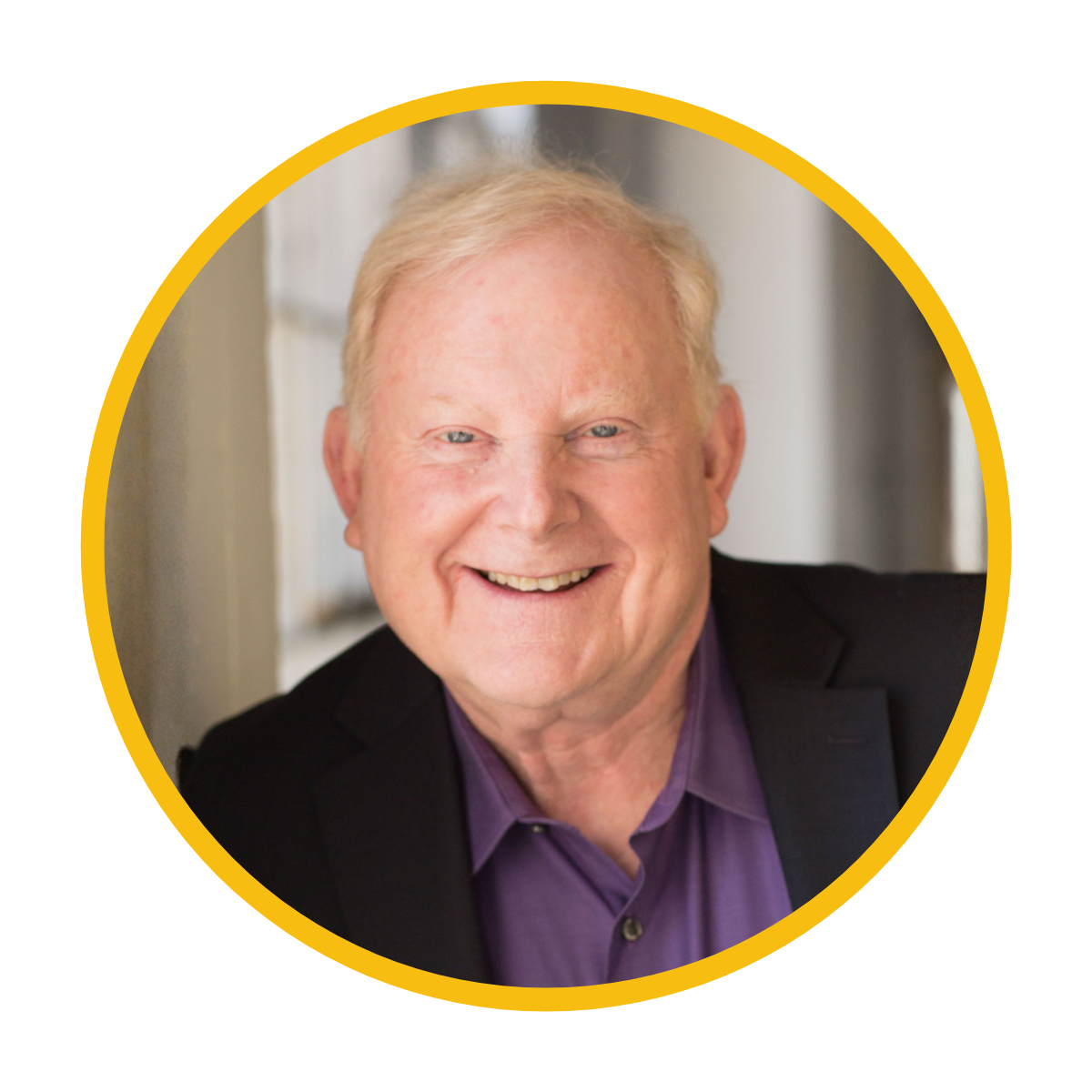
Steve Turner is a veteran public relations strategist and co-owner of Solomon Turner PR, an award-winning PR firm based in St. Louis. A graduate of the University of Missouri School of Journalism, Steve began his career in broadcasting, calling high school, college, and minor league baseball games for organizations including the Kansas City Royals, before transitioning into advertising and public relations.
Over more than three decades, he has led successful campaigns for high-profile clients such as Tony Robbins, Brian Tracy, Steve Forbes, Northwestern Mutual, Coldwell Banker, and HealthSouth, as well as numerous regional and local brands. Under his leadership, Solomon Turner PR has been named one of Small Business Monthly’s Top PR Firms in St. Louis for 18 consecutive years, and Steve has been recognized as a “Rock Star Publicist” by Authority & Media.
Steve is the author of “PR That Works: Real Strategies, Real Campaigns, Real Results,” which outlines practical PR tactics, case studies, and expert insights to help businesses and thought leaders build credibility and measurable visibility. A sought-after speaker and educator, he presents to universities, businesses, and professional groups on topics including branding, media strategy, and the evolving role of AI in PR, often centering his talks on his signature 5M’s framework: mission, market, message, media, and measurement.
He is passionate about helping organizations clarify their story, amplify their brand, and turn PR into real-world results and ROI.
Website (Rockstar Publicist)
Quotes:
09:11 “AI is helping us become more efficient at our job. But we don’t want it to own our job. If we want it to own our job, there’s no need for us.” —Steve Turner
10:37 “What is your mission? What is your objective? If you don’t have an objective that you can clearly state, then what’s the point of doing a campaign? We oftentimes tell businesses to tie that in with a sales or product goal so there’s something tangible that can be looked at.” —Steve Turner
13:00 “The message and how you define it— if you can’t explain that and write it down for everybody, how do you expect a customer to know if you don’t know yourself?” —Steve Turner
16:53 “What we’re trying to do with the campaign: long term, build credibility, trust within the marketplace, have some community impact. If it’s PR, you want to do good things in the community, but we want a return on investment… If you do it the right way, I believe you’ll be successful.” —Steve Turner
23:58 “Being an author elevates you in the minds of different people. If you’ve written a book, you’re a lot higher on that pecking order than somebody that hasn’t. That is a great leverage if you want to be a thought leader, and then that can lead into leverage for speaking opportunities and client engagements and different things like that.” —Steve Turner
26:15 “Sometimes you have to take a chance to have things happen. You got to get out of your comfort zone.” —Dr. Jim Price
30:15 “Be motivated, be in your spirit of wanting to learn and grow and nurture yourself, and things will happen.” —Dr. Jim Price
transcript:
Steve Turner: I believe using these 5 M’s as a guide will get you there faster than just throwing stuff out there constantly and then seeing what works and what doesn’t, wasting all kinds of money. And finally coming back at the end of the day and saying, well, I’m not sure. And if you do it this other way, the right way, I believe your ROI will be good. You’ll be a lot happier, and we’ll have accomplished a lot more. And then you’re willing to invest more money for the next thing that comes around, and your salespeople will sell more. They’ll be happy, and your team will be a lot more successful in looking for the next thing that they can build up for you. So it all comes into play. It all has some impact. And if you do it the right way, I believe you’ll be successful.
Dr. Jim Price: Hello, I’m Dr. Jim Price, and welcome to The Purpose and Progress Podcast. This is the place where we explore how purpose can guide our actions, and how growth can become a part of our everyday lives. On the show, I talk with amazing guests, from educators and creators to everyday people with extraordinary stories about the challenges they face, the lessons they’ve learned, and how to keep moving forward. My goal is to share conversations that inspire you to live intentionally, embrace growth, and take meaningful steps to your own purpose. Let’s get started.
Hello, everyone. Welcome again. This is The Purpose and Progress Podcast Show. I’m your host, Dr. Jim Price. And on this show, we share inspirational stories about inspiring people who do great things in the industries that they serve, and are helping to expand other people’s horizons, and meeting their goals and expectations, and that’s what this show is about. And today is no different. We have a wonderful guest. He is the owner of PR, a nationwide speaker, an author of . He helps individuals and businesses build brands that support their mission, goals and credibility. He can share practical strategies on personal branding, PR campaigns, audience targeting, measuring results, ROI, and how AI impacts branding and messaging. We’re experiencing TV, radio and podcasts, plus features on the Wall Street Journal, Parade, PR Week, and the Los Angeles Times. He brings actionable insights on building a brand that stands out. Today, let’s welcome our guest, Steve Turner. How are you doing, Steve?
Steve Turner:Doing great, thank you so much. Looking forward to having a great exchange of ideas here this afternoon, and it should be fun.
Dr. Jim Price: Absolutely. We were just talking about the differences when school started. So now, routines are changing, and things are happening. In Massachusetts, we have the NBA induction Hall of Fame stuff going on around, and people are excited about that. I’m saying, I don’t get a chance to keep up too much with it because so much is going outside of that. But it’s such a pleasure to have you on the show, Steve. And yeah, let’s dive in. This is about inspiring, motivating other people, and sharing the story. I always say that people know and see the success, but they don’t always know the backdrop to how things happen. And a lot of times, this is what this show is about. To share how those steps occurred, what happened to get you to the point of where you’re at now. I guess we can open up by asking you when you feel that your journey started, and what you feel influenced that.
Steve Turner: Yeah. I went to the University of Missouri School of Journalism, which is very highly known and respected in the industry. And there are Mizzou journalism graduates all over the world writing for newspapers, magazines, or on TV, radio and so forth. And my original plan was to be a major league baseball announcer, so I went for that. Got introduced to sports and news. I worked really hard at that. I went into some small markets and broadcast high school sports and some college sports. Eventually, I ended up doing minor league baseball for the Kansas City Royals, and I actually did exhibition games down in Fort Myers, Florida for the Kansas City Royals. So that was pretty cool. And I got to that level where I needed to ascend to major leagues. I was getting to that point where it’s like, well, okay, I’m older now. And do I want to be 40 years old broadcasting baseball in some little town hoping for a break? The answer was no. So at the same time, I was doing a lot of broadcasting. We were wearing a lot of hats because, especially smaller markets, you have to do more than one thing. So I was radio advertising a lot, and so I would come up with these ideas, which I thought were really good. And I talked to a client and I’d say, boy, this is great. You have great stuff. This should be on a billboard. This should be a newspaper ad. This should be a TV news story. But I can’t do anything about it. All I can do is sell you advertising on our radio station because that’s my job, and I can’t do any of this other stuff. And eventually, I got that.
Well, I love this big idea of coming up with big ideas for clients, businesses and organizations. And so for a while, I worked for an advertising agency in Memphis, and then came back to St. Louis and said, well, I’m going to just start my own public relations firm. And so I just did it. I had a lot of connections from college and different people I knew over the years. And I said, hey, give me a chance. Just pay me something, and let’s put some stuff together. And so I did some things. And over time, you start building a portfolio of work, which is really important in our business. And so you get that portfolio built up of different things, and then you can take that out to other prospective clients and say, hey, we’ve worked on this hospital, this construction company, this architectural firm, whatever it is, and say, Look what we’ve done. We can do the same for you. and so that’s how it got started. I started my company, the Turner Group, and did that for a couple years. And then I merged with an advertising agency, S. Solomon Associates, and we had a complete merger. We got married, Shelly. My partner in business and life was one of the first women to run an advertising agency in St. Louis. And so we hit it off, and we were funneling business back and forth. We said, well, let’s merge. And we did that. We said, let’s get married.
So we had a team, and we were doing all these cool things, advertising in PR, and graphic design, and all these things. We kind of morphed as times went along and people started doing their own graphics on the computer and all this other stuff. We kind of got more into the PR realm, and we were able to work with some big names that I was able to go out and secure. We worked with Tony Robbins, Brian Tracy, motivational speakers Steve Forbes, Northwestern Mutual, Coldwell Banker, Health South. A whole list of people, a lot of local stuff in St. Louis as well, and put together a really good resume to talk to other people about building their brand. So we helped them build theirs, and we thought, well, we could help local businesses as well. So we got on that track, and we’ve been doing that for over three and a half decades. And here we are, Solomon/Turner. We’ve been fortunate that we’ve won some awards.
We were named to Small Business Monthly’s list of top PR firms in St. Louis for 18 years in a row, which is pretty cool. A lot of these PR firms didn’t even start 18 years ago. Maybe five years ago, and here we are. We’ve been on that list. I was also named a rock star publicist by Authority and Media Magazine, so that was pretty cool. And I have a separate website from our corporate website called Rockstar Publicist, which I am using now. Because I’m really interested in not only building my own brand, but doing more speaking. I feel it’s important to leave a legacy in the industry you’re in. I’ve been talking to college kids, and I’ve been to two universities so far. I have three or four more lined up where I’m going to be talking to PR students, and giving them a hint as to what’s going on in the industry, and how they can prepare to move ahead, and what’s in store for them in the long term. Now, a lot of this, we don’t know because of AI, and the full impact of what’s that going to look like 5 years, 10 years down the road. But it’s interesting because we can see what’s happening today and how AI is helping us become more efficient at our job. But we don’t want it to own our job. If we want it to own our job, there’s no need for us. AI bots will take over, and the boss will say, how come the AI bots are doing all the work, and you’re just sitting there collecting a paycheck? We’ll see you. We’ll just program the AI bot to do all the work and not worry about it. I’ve been doing a lot of research and reading on that. It’s very interesting.
One of the things I love to do besides speaking to college students is talking to businesses and organizations, and helping them as a whole build their brand, and give them some ammunition to do so. I’ve been speaking to those folks. I’m trying to build that out and speak to more groups and organizations. So if you’re interested in that, I do have a program called Branding Beyond Boundaries at PR and AI in Action. And what we do is we focus on what’s important and what you can do to build your brand no matter what size company you’re in. Or if you’re trying to build your own personal brand to become a thought leader in your industry, well, there are 5 M’s that we focus on. So we tell people, if you don’t remember anything when you walk out of here, remember the 5 M’s, and you’ll be ahead of the game. And the 5 M’s are, what is your mission? What is your objective? If you don’t have an objective that you can clearly state, then what’s the point of doing a campaign? What are you trying to accomplish? And we often tell businesses to tie that in with a sales or product goal or something so there’s something tangible that can be looked at. So if you say, well, we have a company that makes toy trucks. Oh, great! Okay, well, our goal is to sell 100,000 toy trucks in the next six months. All right, super. How does PR and branding fit into that? What are the pieces that are going to make that happen? And then we can build a strategy, a framework around that. But it doesn’t happen if we don’t know what it is you’re trying to accomplish. So that’s number one.
The second M is the market or who’s the audience. And a lot of times, you want to identify that audience on a very granular level. So people say, well, my audience is women, 25 to 54. Well, show me a woman that’s 25 and one that’s 54, and they’re totally different. You have to focus on it. And people say, well, our market is engineers. We’re selling to engineers. Okay, what kinds of engineers are they? Where are they located? Are they local? Are they regional? Are they national? Are they international? Are they engineers with big corporations, small companies? Do they own their own company? What kind of engineers are there? And then how do you focus the message after you decide the audience and identify them? What’s the message? What makes you different from every other product or service business that’s out there? What is your competition doing? How are you different from them? A lot of times, we’ll run into people and say, well, I’m a business coach. I’m like, okay, that’s good. Who are your clients? CEOs of companies are who I’m after. And I’m like, that’s fine. But is there a niche in there, a niche that you could focus on? Well, I do a lot of work with construction guys. I said, there you go. Focus on the construction industry. And if you’re really good with them, you can differentiate yourself and build a big following in that certain vertical segment, as opposed to just trying to be a business coach to everybody that’s out there that’ll give you a couple bucks to work with you. So that’s very important. The message and how you define and write it down so everybody in your organization understands who you are, and what the goals of the company are. And if you can’t explain that and write it down to everybody, how do you expect a customer to know if you don’t know yourself? So that’s a big problem. So that’s the third M.
The fourth M is media. How do you get the message out there? And what’s it going to take? Is it social media? Your clients on TikTok? Are they on Instagram? Are they on Facebook? Are they on YouTube? Or are they best reached by traditional media? And by that, we mean newspapers, radio, television, news, and things like that. Trade journals. What is the best way to reach that audience? So you have to figure all that out. And there may be more than one right answer. Maybe some people are best reached on YouTube and others on TikTok, and so you have to devise a strategy for both. So the media is very important.
And then the final step, which could be the most important, is measurement. the fifth M. How do you measure this stuff? How do we know if it’s working? Well, if you don’t measure it, you’ll never know. And you’ll just spend money and say, it seemed like it was working okay. I don’t know. So if you measure it, you can go back and say, this is our mission objective, and this is what we decided to do. 100,000 toy trucks in six months. Well, after a couple months, you can look into it to see how the campaign is impacting you. Is it effective or not? And there may be two out of six things that are going great, and four out of six that are just like, eh, not really. And a couple of just a waste. Okay, we figured that out. Now we tested it, and so forth. Well, let’s put more money, energy and time into the stuff that’s working, and get rid of the stuff that isn’t. And then you can decide to go forward, and you’ll have a lot more impact and a much better return on investment if you do it that way. So over time, we’ve worked with all kinds of clients. A lot of them just want the press, which is fine. A lot of them have the other stuff figured out. Or they think they do, or they just want their name in the lights. They want to see their name out there, and it’s cool. And the guys at the country club will pat them on the back and do all these things, which is fine if that’s what you’re after. But how does that move the needle? Ideally, what we want to do is give the sales team ammunition to go out and make more sales. So by having a PR branding campaign with newspaper articles, trade journal articles, videos, different things, you could take that onto a client meeting and say, hey, look what we’re doing. As opposed to just giving him a brochure, opening up your iPad, and saying, well, you know, these are some of the clients. They’re really happy. Everything’s great. Blah blah blah. Well, you’re never going to show them the bad stuff anyway.
So can you convince them off an iPad and your website? Well, probably maybe. But maybe not. But it’s a third-party endorsement if you get a local newspaper, a local TV station, a trade journal, a business journal, or some outside sources talking about you. Maybe you’ve won some awards from an outside source, and you put all that together, and you give that to your salespeople, and they go out and show that off. It’s like, well, it’s not just us saying we’re great. It’s the Wall Street Journal, it’s the New York Times, it’s NBC, it’s the local affiliate. So pretty soon, you have all this ammunition you can use, and that will really help you in your sales effort, as opposed to just going out saying, we’re great by us. Here’s all these other people saying we’re great. You can make up your own mind. But if we’re good enough for all these people, I would think we’ve got enough credibility to be good enough for you. So that’s what we’re trying to do with the campaign, long term, build credibility, trust within the marketplace, have some community impact, for sure. If it’s PR, you want to do good things in the community, but we want a return on investment. And I believe using these 5 M’s as a guide will get you there faster than just throwing stuff out there constantly, and then seeing what works and what doesn’t. Wasting all kinds of money, and finally coming back at the end of the day and saying, well, I’m not sure. And if you do it this other way, the right way, I believe your ROI will be good, and you’ll be a lot happier, and we’ll have accomplished a lot more. And then you’re willing to invest more money for the next thing that comes around, and your salespeople will sell more, and they’ll be happy, and your team will be a lot more successful in looking for the next thing that they can build up for you. So it all comes into play. It all has some impact. And if you do it the right way, I believe you’ll be successful.
***Looking for books that spark imagination, and teach valuable lessons? The Adventures of Harold From The Hood has four wonderful titles: A Trip to the Park, Friends Like Different Things, Fun Time Lunch Time, and When I Feel So Annoyed. Kids can enjoy animated videos, fun coloring pages, and interactive activity books that make learning about empathy, friendship, and social skills exciting. All books are available on every platform. Dive in today at jimpricebooks.education. jimpricebooks.education. Stay blessed.
Dr. Jim Price: That is excellent. I know even with myself, I didn’t know anything about that. You publish a book, you put out a book. I don’t know anything about marketing PR. I didn’t know anything about any of that kind of stuff. But people don’t realize how important that is. That’s the backdrop and almost like the backbone to how you expose and reach an audience that you probably wouldn’t even reach normally. So a lot of those. I love the idea of all the M’s. That is fabulous. I know people, the audience watching, they’d always know that that’s the backbone of a lot of the stuff. They see the success, they see the book, they see whatever. Maybe it might be exposed here and there, but that’s the backbone of everything that happens behind the scenes that a lot of people don’t even recognize or see. So I think that’s wonderful. Can you tell us a little bit about the book too? Can you give us a little?
Steve Turner: Sure. I wrote , and I’ll hold it up. And there’s all kinds of stuff. So yes, I believe in everything ourselves that we’re doing in our own brand. But it’s an interesting idea because I got to the point where I wanted to write a memoir about what I’ve done. I went to some creative writing classes at a university here in St. Louis. And each week, we would write something and sit down with a group of about 10 people, and everybody would read their chapter aloud. People would say, change this. Or maybe you could take this in a different direction. It was constructive criticism from a very interesting group of folks, and so I started doing this and telling them about some things I’ve done in Pierre. I said, it’s funny. We dabble in public relations ourselves. We do some things, but there’s not a book out there that we can buy that tells us how to do a campaign, and do it correctly that we can understand. There’s these huge textbooks full of theory that are like 150, 200 dollars. I’m not going to buy that. And then there’s these things that are on consumer behavior and all this, and they’re like, I don’t understand that kind of stuff. Just tell me how to put a campaign together, will you? And I said, you know what? I think I can write that book. So I took all our experiences and put it together with 28 strategies that anybody can use right away to start from scratch and build a campaign. Then there’s 14 case studies of actual work we’ve done with authors and a classic car dealer here in St. Louis that has clients all over the world, and high tech companies, all kinds of stuff, and it’s all there. And then I interviewed four top PR professionals around the country to get their input as to where the whole idea of PR is going, the profession and so forth. So it’s not just me. It’s them as well.
I put all that together into this book, and I thought, wow, this should be useful. And it’s easy to understand bites, easy to digest. So you don’t need a PhD to figure this out. It’s like three or four pages with bullet points. Here’s what you learned at the end of each chapter. So you get all that stuff, and it’s in paperback at Amazon and some other places in Kindle for people that like the Kindle format. I always say the book costs $19.99, whatever it is. And a lot of people said, well, I’m going to refer back to this over time, and I’ll put that on my desk with my laptop. And every time I get stuck, or need an idea, or an event idea, which there’s a lot of event ideas in here, I’ll refer back to this book. And I said that’s interesting. Because years ago, I was at the University of Pennsylvania in Philadelphia. I was working on a project for a client, and I happened to walk into Penn Ivy League school. I thought, well, this is the only way I’m ever going to get into Penn is to walk in. So I walked in there, and I walked into the warden’s school just to look around. In those days, there were no security guards or anything. You just do anything you want. So I walked in and looked around. Okay, I get it. There wasn’t a class, but I just wanted to see the halls and get the feel. So then I went to the bookstore, and there was a book on PR cases, which I had never seen before. I said, wow, this is very unusual. I bought that book, and I still have it. And every once in a while when I get stuck, I’ll refer back to that. I figure, well, if I have that book for 20 years, which I have, the investment’s like $1 a year. It’s silly. But if you think about it, that’s what it is.
It’s great to have these things, these reference books. I’m sure people have reference books in other kinds of industries. If you’re a teacher, you have some reference book about teaching this and that. And it’s probably close to your desk, or an engineer, an architect, whatever it is. So this is a way for somebody that’s a business owner, a small business owner, a thought leader, somebody that wants to be a thought leader, or other people that just want to learn more about PR. It’s available. And again, it’s at Amazon in Kindle format. It’s at barnesandnoble.com and a bunch of other places. So it’s out there. And so that was the idea behind it. And it’s done well. Happy with the results so far. It’s still kind of early. But the other thing you do with a book like this is marketing one on one. You leverage it for other things, as you probably know. Being an author elevates you in the minds of different people, so it’s the author. And if you’ve written a book, you’re a lot higher on that pecking order than somebody that hasn’t. So it’s like, what have you done? Well, I’ve written a book. Oh, what? Tell me about that. So that is great leverage if you want to be a thought leader, and then that can lead into leverage for speaking opportunities, and client engagements, and different things like that. So that’s how it’s starting to morph as we go along here.
But I love to speak, as you can probably tell. I would love to meet people that would like to talk to me about branding in PR, and just hear my presentation. They don’t have to buy anything, but are happy to do a virtual thing if they want to fly me in, meet their team and all that. That’s great. Not necessary, but we could do it over Zoom or whatever, just to go over some basics and see where it goes. And I’m happy to help anyone. People ask me questions. They email questions in and want answers. Hey, I’m stuck. What should I do? Do you have any thoughts on this kind of thing? We can help with that. So that’s kind of the purpose of the book and what I’m doing now. I’m just having a good time with the whole thing. To be honest, it really is a lot of fun going on podcasts like this and talking to people that I would normally never get to know. But this is so much fun, and it’s just a pleasure. I mean, it’s great. Everybody has different backgrounds, different viewpoints, different frames of reference, and so you get to meet them and hear what they’ve done in their past, and it’s really interesting to me.
Dr. Jim Price: That’s also amazing. Like I said, people don’t know. They see everything, but they don’t ever see the backdrop of everything that happens to get to where things happen. If you were to give advice to the audience, somebody maybe who is looking to that before we close out, any advice you would like to share for someone who’s watching, for our audience.
Steve Turner: Just want to start from scratch and build a campaign?
Dr. Jim Price: Maybe if they were just thinking, they’re just in terms of maybe even motivating them to be able to be like, hey, I can do this. If you have to take a chance, sometimes you have to take a chance to have things happen. You have to get out of your comfort zone.
Steve Turner: Absolutely. I think it was Wayne Gretzky, the hockey player, who said, you have to get comfortable with being uncomfortable. So that means a lot. I’ve been out of my comfort zone a lot of different things lately. But I would just start writing some ideas down and say, this is who I am. And this is who I want to be. What are the steps that I need to do to get to that special place or room where I’m raising my identity, my brand to a different level? Let’s figure that out. Let’s start with step one. Who are you? What do you want to be when you grow up? What’s your mission? What’s your objective? And it gets back to that, I want to be a PhD. Or I want to run a marathon, and I’ve never run in my life. What should I do? Well, it’s baby steps. You start walking around the block. You get up to a mile, two miles, five miles. You start throwing in jogs, and you start jogging half the way. Then you’re doing like a 10 mile deal with five walk, five jog. And all of a sudden, you’re doing eight, 5k, 10k. And all of a sudden, you’re running a mile, and then you’re starting to do all these things with marathons, and all these people get hooked and so forth. So it kind of starts with baby steps. I would just write down, what is your goal? It could be anything. What steps do I have to take to get to that goal? Are there books I need to read, or podcasts they need to watch? Can they go on YouTube? Which to me is the greatest thing ever because you can go on YouTube now, and there are like Harvard professors. If there’s the best people in the world, we have YouTube videos. It’s amazing what you can learn. I mean, stuff that’s way over the average person’s head, including mine. But there’s enough nuggets that we can take from it to put into our own arsenal. So there’s stuff like that. So you have to figure, what do I need to get to that next level? Let’s talk instead of going from point A to F, let’s talk about going from A to B. How can I do that? And if you can get a mentor, this is the secret sauce. If you can get a mentor that’s already gotten to the top that you want to be at, or at least part of the way, you could maybe skip B and C, and get to D with the help of a mentor. Well, I already tried all this stuff through trial and error. It took me years and a lot of money. But I’m going to tell you now how to get there without all that stuff.
If you find somebody that’s been there, that’s the whole trick. Find a mentor and somebody that’s been there. And a lot of these mentors, they may even be multi millionaires. They’re willing to help. Chances are, somebody will help them climb the ladders of success, and a lot of them are great people. They’ll sit down with you, have a cup of coffee, what is it, Steve? What are you trying to do here? Maybe I can help you. I’ll give you 10 minutes. Well, that’s 10 minutes of really high quality time that they’re taking. And they have to go on to their next project. But that’s out there.
Dr. Jim Price: That is so fabulous. Those are such nuggets of truth and stuff that help an audience. I know the audience is definitely soaking this up, and I definitely want you all to get on online and buy Steve’s book, and support him because he’s doing fabulous work, and really trying to help others. This is what the show is about. Trying to help and motivate others to be the best they can be. So Steve, so glad to have you as a special guest on the show. I always like to say as we try to end things like, be motivated, be in your spirit of wanting to learn, grow and nurture yourself. And things will happen when you have a positive mindset like that. So once again, this is The Purpose and Progress Podcast Show. I’m your host, Dr. Jim Price. Stay prayed up, and stay blessed. Till next time, take care.
Thank you for joining me on this episode of The Purpose in Progress Podcast. I hope today’s conversation gave you insight, inspiration, or a fresh perspective to help you move forward with purpose. If you enjoyed the episode, please subscribe, leave a review, and share it with someone who could use a little encouragement. You can also support the podcast through the donation link in the show notes. Every contribution helps us keep sharing stories that uplift and inspire. Remember, your purpose is waiting, and progress never stops. I’ll see you next time.