
“Don’t try to follow what other people are doing… You have to find your own uniqueness and your own path…. Do what makes you happy, and what actually works out for you.”
Most people entering the entertainment industry are told there’s a right way to do it: get an agent, get a manager, work the system. MariaCrystal Melo followed that advice for years. It wasn’t enough.
In this conversation, award-winning actress, writer, producer, and director MariaCrystal described what it took to build an acting career when the traditional path stopped delivering the opportunities she wanted.
Recognizing the Pattern
Melo started performing in high school theater and moved into professional auditions at 19. Through years of commercial casting, she noticed she kept being called in for the same narrow type of role, again and again.
Instead of continuing to wait for something different, she picked up a pen. Her first short film, The Healer, was made with no budget whatsoever. It still reached a UK-based film festival, which flew her in for a live interview — an early signal that writing her own work was worth pursuing seriously.
A Slow, Steady Build
From there, the projects kept coming. Homebound, which addressed homelessness, earned theater screenings in Toronto and a finalist spot at the Athens International Film Festival. Blood Money was later played in an actual Cineplex theater. Her newest film, Angel, just picked up three nominations at the Toronto Nollywood International Film Festival, including Best Director and Best Actress.
Melo is upfront that none of this happened quickly or easily. Budgeting without investors, securing locations, and learning distribution were all things she figured out as she went.
Why She Won’t Hand You a Formula
Ask Melo for advice on building an acting career, and she won’t give you a step-by-step plan. She knows actors who built strong careers through the traditional union and agent system. That path didn’t work for her — and she’s clear that trying to copy someone else’s road rarely leads anywhere good.
The Takeaway
Building an acting career, by Melo’s example, sometimes means writing the work you can’t find anywhere else instead of waiting to be selected for it. Her path from a zero-budget short to multiple festival nominations had no map. She built it herself.
Hear the rest of her story, including the lessons she’s learned about distribution and audience-building, on the latest episode of the Purpose and Progress Podcast.
Episode Highlights:
01:45 Meet MariaCrystal Melo: Writer, Actress, Director
05:49 Getting Boxed In by Commercial Casting
07:00 The Decision to Write Her Own Work
10:04 Maria Crystal’s Films Reach International Audience
15:04 Why There’s No Single Right Path
19:39 Connect with MariaCrystal Melo
Resources:
📖 The Adventures of Harold from the Hood Book Series:
🚙A Trip to the Park: https://bit.ly/40Lvv6h
🤝🏽Friends Like Different Things: https://bit.ly/4ocAQxq
🍟 Fun Time Lunch Time: https://bit.ly/4odUCJ1
😤 When I Feel So Annoyed: https://bit.ly/4l6WSPt
Meet Mariacrystal:
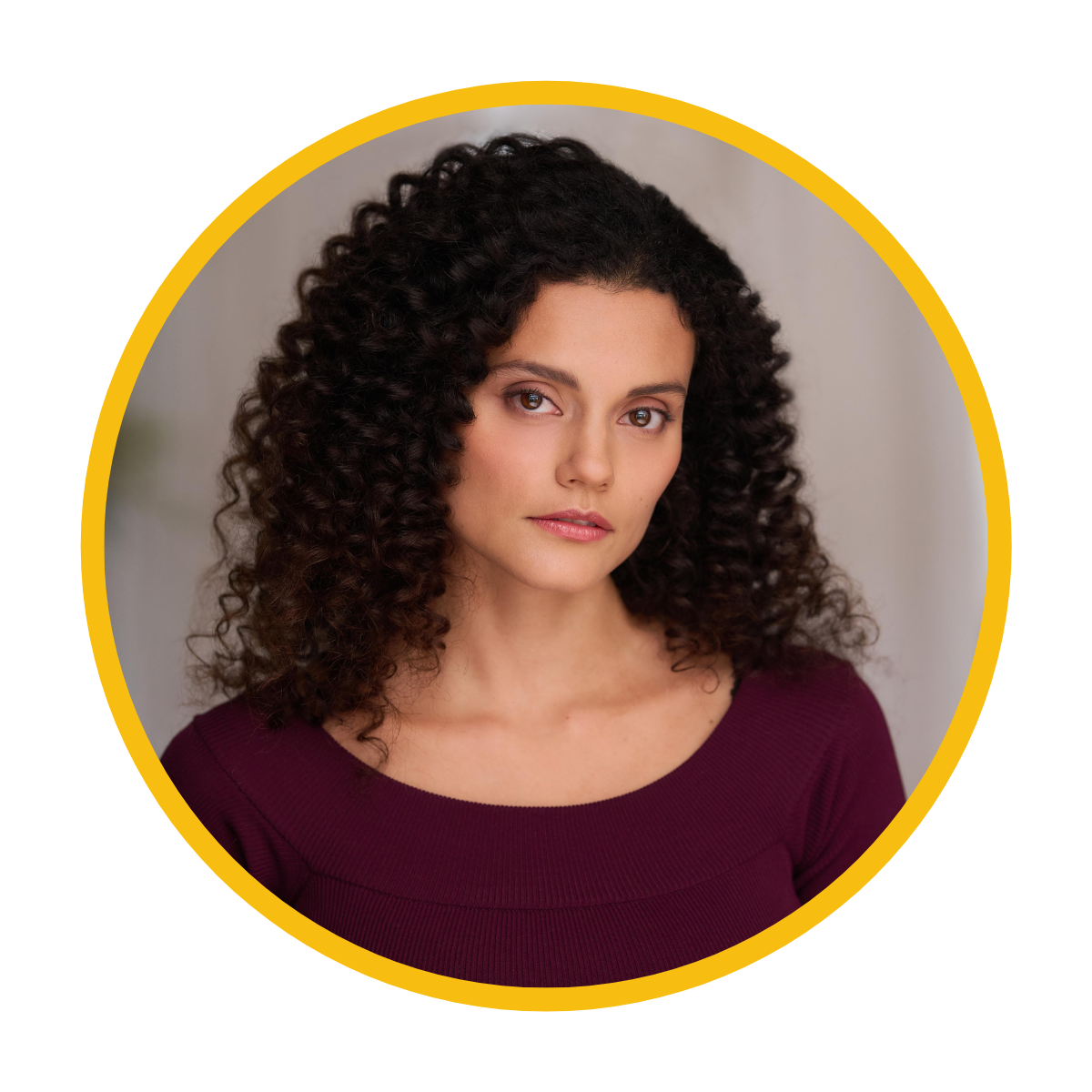
Mariacrystal Melo is an award-winning actress, writer, producer, and director based in Toronto. Beginning her journey in high school theatre, she has steadily built a versatile career across stage and screen, driven by a passion for nuanced storytelling and complex, character-driven roles.
After years of working as an actor, Mariacrystal expanded into writing and producing to create the kinds of roles and narratives she didn’t see available in traditional casting. Her first short film, “The Healer,” gained international attention through the Liftoff Global Network as a first-time filmmaker. She went on to co-create “Homebound,” a short film exploring homelessness that was screened in Toronto, became a finalist at the Athens International Film Festival in Greece, and drew interest from local venues and curators.
Her work as a filmmaker further evolved with “Blood Money,” a short she wrote, produced, directed, and starred in, which was screened on the silver screen at a Cineplex theater and later picked up by a streaming platform. Her latest film, “Angel,” directed by Lefty Quicken and co-written and co-produced by Mariacrystal, has been accepted into the Toronto Nollywood International Film Festival, where it has been nominated for Best Director, Best Experimental Short Film, and Best Actress.
Quotes:
08:01 “It’s more about just publishing your work online and trying to build up your audience as much as you can, and that does take time, obviously, because nobody goes viral overnight.” —Mariacrystal Melo
09:19 “The industry is big, and there’s so there’s a plethora of avenues and corridors and paths that we all navigate toward getting to where we want to get to.” —Dr. Jim Price
12:39 “I’m very excited about all those achievements; the slow-burning moments are just great.” —MariaCrystal Melo
15:51 “Don’t try to follow what other people are doing… You have to find your own uniqueness and your own path…. Do what makes you happy, and what actually works out for you.” —MariaCrystal Melo
17:51 “Sometimes people are uncomfortable getting outside of the box— that could bring forth a lot of stagnation… Everything is going to work, but it’s a matter of going to have the confidence to be okay with going outside the box to meet those goals or aspirations that you’re trying to reach.” —Dr. Jim Price
transcript:
MariaCrystal Melo: Don’t try to follow what other people are doing, because this is the kind of thing that I never used to do when I was starting out as an actor. People would be like, okay, so what kind of career do you want? Who is it that you compare yourself to, or who you’re inspired to be? And I think there’s nothing wrong in looking up to a fellow actor or an artist. You admire their work, but they’re not me, and I’m not them. You have to really find your own uniqueness and your own path, because what may work for someone else may not work for you.
Jim Price: Hello, I’m Dr. Jim Price, and welcome to The Purpose and Progress Podcast. This is the place where we explore how purpose can guide our actions, and how growth can become a part of our everyday lives. On the show, I talk with amazing guests, from educators and creators to everyday people with extraordinary stories about the challenges they face, the lessons they’ve learned, and how to keep moving forward. My goal is to share conversations that inspire you to live intentionally, embrace growth, and take meaningful steps to your own purpose. Let’s get started.
Hello, and welcome to The Purpose and Progress Podcast show. I’m your host, Dr. Jim Price, where we show inspirational stories, motivational stories about leader industries who are doing so many fabulous things. And today, we have a guest who’s no different, doing so many fabulous things, and bringing inspiration and motivation to so many. She is an award-winning actress, writer, producer, director of 520 Film. She’s definitely got a lot of accolades, and she is MariaCrystal Mello. How are you doing today?
MariaCrystal Melo: I’m doing well, Jimmy. Thank you so much for having me on your show. I’m really excited and honored to be here. This is amazing. Thank you so much.
Jim Price: Thank you for willing to be a guest on the show. I know we touched base here and there before the show, and talked about a lot of different things and stuff even before the show, and talking about that story of inspiration, motivation, people making progress toward their goals and aspiration of things. We’re just talking about that for the show, about how people always see the finished product, but they don’t really get to understand the process of what happened to get there, to get where you’re at, and to get all the accolades and stuff. I think that’s something we could start off with. Where do you feel your journey started, and what influenced you?
MariaCrystal Melo: Yeah. It goes way back. I started out very young as an actor. Actually, I just started out as an actor when I was probably in high school. I wanted to do theater, and I remember wanting to do acting even earlier than that. But my mom, my parents were like, you should wait until you’re older. Didn’t want me to do acting too early as a kid, so they just wanted me to go through school. And then as soon as I went into high school, I did theater. I was in every production, and I wanted to do acting so badly. And then I remember after I graduated high school, I wanted to pursue it very seriously. And at the age of 19, that’s when I really went into it seriously. I started auditioning for small projects, student films, anything that I could do to try and build up my portfolio as a beginning actor.
But I think my career didn’t really progress. I think until maybe just after the pandemic, because I kind of went through an interesting shift where I had representation, I had an agent and a manager, but I felt like it wasn’t really the direction that I wanted. I felt like I had more stories to tell. There were roles that I wanted to play where I didn’t really see that were out there, and other themes and topics that I felt really passionate about. So I started writing and producing not just to create my own work, but actually to create a versatility of work for myself as a performer, because I felt like there was so much more that I could show rather than just doing one liner. Not that there’s nothing wrong with that, but I felt like there just wasn’t enough versatility in terms of what I can express. And now that I’ve done already a couple of written, co-produced and directed a couple of short films already under my belt, I feel like now it’s just been branching off to working with other creators and other directors, so I think it’s just a matter of having that passion, that drive and knowing where I want to be, and having that direction as an artist and where I want to go in terms of what kind of roles that I want to do, and what kind of stories I want to tell.
Jim Price: That’s so fabulous. People sometimes don’t understand that. I remember when I was in my associate’s degree, and I had to do undergrad, just pick some classes on it, and one of the classes was actually acting class. I did a little Broadway play and everything, and I was in there. I was like, oh, my goodness, I couldn’t believe how people think it’s easy. It’s hard. It’s very hard when you have to remember all the lines and all this stuff, and you’re going through, I was like, oh, man, this is a lot. People don’t understand. But that small experience I had when I was at junior college and stuff like that, I had selected that class, a theater drama class, and doing that kind of opened my eyes. This is not easy. You were doing a whole production, and like you’re maybe a lead character and all that stuff, all the lines, and all the cues of when to speak. There’s a lot to it. So people, they see the finished product, of course, but they don’t appreciate all the work that goes behind a lot of the stuff that goes on with that, so thank you for sharing that. What do you feel were some of the obstacles that you faced, or may have challenges that you faced as you were getting into the industry, finding your niche, and working your way through the process to get to where you’re at today?
MariaCrystal Melo: Yeah. There was quite a lot. It stems from, I guess, what you call branding nowadays, the personal brand, which back then wasn’t even like, when I first started, it wasn’t even like a term. And even just logistics now, and being a producer, there were so many obstacles. One of them, I think I started out as an actor first before anything else. I was trying to find where I fit in because a lot of actors struggle with it. Because when you go into the commercial side of casting, and that’s when you deal with all the bigger productions, and you’re dealing with passing directors and the networks, they have a specific type that they want, and that type can be very, it can seem like you’re put in a box sometimes. And I’m not the kind of artist, like as a performer, I’ve always been very, I wouldn’t say experimental, but I do like versatility.
And I do tend to get casted for different looks, especially. So there was always that kind of conversation of like, okay, well, what’s your ethnicity? Where do you fit? Do you even fit in at all? What do you come across as? So I kind of dealt with that as well growing up. And from my teens when I first started up until, I didn’t really feel it until probably like five years ago when I was actively auditioning for real networks. And then that’s when I noticed that there’s definitely a struggle with finding out where I actually fit in. Because I noticed that I would get rules for specific types, and I’m just like, I’m noticing a pattern here. There’s nothing wrong with that.
I don’t mind playing that once in a while if I have to just get my foot in the door to just gain the experience, but there’s more I know that I can do. So that was one issue, or one obstacle, I would say. And then it came down to producing, and then writing my own productions. There were always budgetary issues, there’s always location issues. There’s always figuring out, okay, well, if I ever want to get investors, what’s that process like? And then I’m saying the business side of things, understanding distribution, eventually learning about that on the surface. So there’s so many things that I’m still learning even now. But from my experience, I’ve learned a lot. And after understanding how the industry is constantly changing, now it’s more about just publishing your work online and trying to build up your audience as much as you can. And that does take time, obviously, because nobody goes viral overnight. But I’m doing it gradually and slowly. The slow burn is kind of happening where people are starting to notice my work and the people that I work with, and work that’s around, so I’m very honored and very proud that I’ve come this far and just keep going. That’s it.
Jim Price: It’s interesting because you’ve gone through this amazing journey to get where you’re at. Like myself, I’m just getting into cartoon animated stuff for my books and stuff like that. I really have just been learning on the fly how to really navigate a lot of that. And people really don’t know how much goes behind a scene. Even when you talk about the casting roles and stuff like that and people ask about, hey, how do you fit? All these questions about everything, they’re so particular about everything that it makes it seem like it’s definitely tedious. There’s got to be a lot of pressure when you’re trying to navigate a lot of that. You’re seeing all these things happen, and going in the direction of trying where you’re going to go, you probably see a lot of the other actors struggle too in the same way because this industry is big. The industry is big, and there’s a plethora of avenues, and corridors, and paths that we all navigate toward getting to where we want to go and stuff like that. Thank you for sharing that, because people don’t really know. They see the finished product, but they don’t know about the journey, the purpose, the progress that goes behind everything. I think that’s amazing, MariaCrystal. I would like to know, in terms of achievements, your personal achievements and stuff, what you feel have been probably some of your feelings, some of your premier achievements in terms of your journey along your purpose and your progress, and everything that you’ve done so far.
MariaCrystal Melo: Yeah. First, there’s quite a few. I’m just trying to remember, but we go way back. I think the first short film that I’ve ever written and produced was called The Healer, and that one took me by surprise because I stirred it up from nothing. There was no budget in that, like literally, I did it just to try and create something, and it was just after the pandemic. I was submitting it to small little film festivals, and then it got noticed by a film festival called the Lift-Off Global Network, and I submitted it under a category under the first time filmmaker session, which I was because I was a first time filmmaker. And there were these two individuals that ran a YouTube channel for this particular festival, and then they reached out to me. They’re like, we really loved the film, and we’d love to interview you on a YouTube live stream for our festival. We want to showcase the film and ask you about how you made it. So that was a really cool experience, and I consider that as an achievement because it was my first time. You never think that your first project would be noticed by someone based in the UK. They saw, and they just felt connected to it.
Then after that, I did another short film called Homebound, which touched on the subject of homelessness, and that was very, very cool too because it got some screenings in Toronto where I’m based. There were people that came up to us and wanted to screen it in small theaters and venues, and that was really exciting. We did it with my director, and it was like a finalist at the Athens International Film Festival in Greece. I won some pretty cool accolades, and it got some recognition, and then it got picked up by a small streaming platform called, it was a IMDB or streaming platform that just launched.
But a few years ago, I did a small little short film called Blood Money, and that got actually screened in a real actual movie theater on the silver screen, and got picked up by a festival. I had like a little premiere, and it was the first time one of my films that I ever directed, which I acted, produced and directed, and acted in, and it got screened in an actual Cineplex theater, which was really cool. And now, there is our newest film called Angel, which is directed by Lefty Quicken. Written and co-produced by yours truly, and I’m actually the main actor in the film as well. I just got accepted to a really great film festival called the Toronto Nollywood International Film Festival, and it’s being nominated under three categories for best director, best experimental short film, and best actress, so I’m very excited. I’m very excited about all those achievements. The slow burning moments are just great. It’s coming together. I’m very happy.
***Looking for books that spark imagination, and teach valuable lessons? The Adventures of Harold From The Hood has four wonderful titles: A Trip to the Park, Friends Like Different Things, Fun Time Lunch Time, and When I Feel So Annoyed. Kids can enjoy animated videos, fun coloring pages, and interactive activity books that make learning about empathy, friendship, and social skills exciting. All books are available on every platform. Dive in today at jimpricebooks.education. jimpricebooks.education. Stay blessed.
Jim Price: Wow, that is incredible. Congratulations. I’m sure when you were getting the news, and sometimes you don’t know what’s going to happen with something, and then all of a sudden, you get the news, and you’re overly excited. You’re like, oh, my goodness, this is actually happening. You just have a level of excitement because you put all this work in, and to make things happen, and all of a sudden, you’re seeing the fruits of your labor actually come to fruition in that way. I think that is fabulous when you’re able to put in that work and everything, and then actually see the progress being made, and it’s so fulfilling on so many levels. It boosts self-esteem, self-confidence, all those things that are part of that healing journey, and purpose and progress that we talk about in people’s lives and stuff. Even here on the platform, we’re talking about motivating people and stuff, and your story is definitely a motivational story that definitely is inspirational in a lot of ways. I congratulate you on all the success that you’re going through, and I’m to continue the success that you will build upon, and stuff like that. People see the glitz and the glamor, but they don’t know all the progress of how to get there. Thank you for sharing all this wonderful, inspirational message with our audience here. If you were to say like, for aspiring actors, producers and people in the industry that were trying to maybe get in the door and try to get a hold of themselves and probably have the opportunity, what advice would you give to inspiring actors, producers and people who want to get into the industry, in our audiences, what advice would you give to them?
MariaCrystal Melo: Yeah. I would never want to place my own opinions because every person’s path is so different. My path is so different from everybody else. I can only say that what may work for someone else may not work for you. I do have colleagues of mine who are successful actors, and they’ve done it the traditional way. They’ve done the union. If they have the manager and the agent, and they’ve booked through their agents, and they’re booking, and they’re doing great. And then they’re actors, like myself, where that did not work out the best way in that direction. But yet they write, and they produce a script, they write something, the act in it, and then it gets noticed. And then before you know it, other directors want to work with them, and then they just kind of branch out. So I think what I can say is that, don’t try to follow what other people are doing because this is the kind of thing that I never used to like when I was starting out as an actor. People would be like, okay, so what kind of career do you want? Who is it that you compare yourself to? Who do you aspire to be? And I think there’s nothing wrong in looking up to a fellow actor or an artist that you admire their work. But they’re not me, and I’m not them so you have to really find your own uniqueness and your own path because what may work for someone else may not work for you.
And the one thing that I can say is that we have a lot more resources now. There’s this whole thing now with YouTube creators being recognized online, which is phenomenal, but that might not work out for you that way. It might work out in another way. It just means that we have more resources to be seen and to show our work, which is fantastic, whether that’s YouTube, whether that’s TikTok or Instagram, wherever the case may be. Or even if you do it through a traditional festival route, which can happen as well. I know some people. They’ve done very well in that traditional way. It all depends. I would just say that it’s very hard not to compare yourself. That’s another thing that tends to happen in acting. When you’re just an actor, you always compare yourself like, oh, that person got the job, and I didn’t get it. And do they look like me? Do they sound like me? Do they take my esthetic? That kind of whole branding thing.
At the end of the day, the great thing about 2026 is that we have so many resources to be seen, and you never know where it might hit. It could be on TikTok, it could be on YouTube, it could be anywhere, really. And the great thing is there’s so many festival venues too, which may or may not work out, but you do it anyway because that’s just a way to get your work out there for people to see you in any capacity, which I think is great. Just embrace your uniqueness, and don’t try to follow what other people are doing. Do what makes you happy and what actually works out for you. And if you see the results and it’s working, then stick to it.
Jim Price: That’s so fabulous. And sometimes, people are uncomfortable getting outside of the box. or they get comfortable in a certain place, and then they are almost afraid to go outside the box of their comfort level. And when you have those kinds of situations, sometimes, that could bring forth a lot of stagnation where you’re not really believing in your abilities and your purpose being to move through the thing, do the things you want to do. Everything is going to be work, but it’s a matter of, are you going to have the confidence? Are you going to be okay with going outside the box of what maybe you’re comfortable with to bring toward the success, or meet those goals or aspirations that you’re trying to reach, just like you mentioned there.
It is so good when you put it all together and have things happen in a way and gravitate toward having everything work in the way it does, especially in your case, MariaCrystal. You’ve definitely put in the work. And I mean you’ve been putting yourself out there even with the festivals and stuff. You’ve diligently been put in the work to do the things you need to do to put yourself in a position where you can see success and things like that. And I’m waiting, definitely waiting to see any of your upcoming projects. I have been keeping up with you, and I love all the work that you’re doing. I’m definitely a fan of the work that you’re doing now. And just continue on, and I always say, I always cooperate with prayer in everything I do. So as long as you’re keeping a positive mindset, and you’re looking and inspiring, and not being afraid to reach back and help somebody else who may be on their path, I’m trying to inspire them that way, and it’s always a good thing. That’s where a lot of times you get your blessings and stuff too through helping others. You’re doing a fabulous job there. How would our audience be able to connect with you, your work and things like that? Let the audience know how they can connect with you.
MariaCrystal Melo: Yes. They can follow me on Instagram. I’m very much more active there. It’s mariacrystalmelo, all one name. You can find me there. And I do have a YouTube channel that I’m building up as well, and I post my blog, so just kind of like my experiences working as an actor and a filmmaker as well. And I will be posting some of my few projects there as well soon. Eventually, I just searched up my name on Youtube, Maria-Crystal Melo. Like and subscribe, and follow my journey, and I will be posting my videos there.
Jim Price: Thank you so much. This has been such a fabulous conversation. I was saying before we started, we’re gonna have fun with it, we’re gonna do our thing. I’m gonna learn more about you, MariaCrystal, the journey, the behind the scenes of the success. It’s been such a blessing and an honor to have you on the show. I’m hoping, I know our audience definitely pulls some nuggets and some gems out of there that’s inspirational, motivational for them. And that’s what this show was about, purpose and progress, about growing and nurturing your gifts and your abilities to be able to do things and make progress in a positive way. So thank you, MariaCrystal, for being a guest today.
MariaCrystal Melo: Thank you so much for having me. It was wonderful meeting you, and much success. And God bless. Thank you so much. I really appreciate your support. This was a wonderful interview. I loved it. Thank you.
Jim Price: Thank you so much. To our audience, this is The Purpose and Progress Podcast show. I’m your host, Dr. Jim Price. And once again, we are working with making purpose, making progress, doing the things we need to do to uplift others, inspire others in the best way we can. So until next time everyone, stay blessed.
Thank you for joining me on this episode of The Purpose in Progress Podcast. I hope today’s conversation gave you insight, inspiration, or a fresh perspective to help you move forward with purpose. If you enjoyed the episode, please subscribe, leave a review, and share it with someone who could use a little encouragement. You can also support the podcast through the donation link in the show notes. Every contribution helps us keep sharing stories that uplift and inspire. Remember, your purpose is waiting, and progress never stops. I’ll see you next time.